Text: Thomas M. Gerbeth, IPCI Deutschland e.V. · 2025
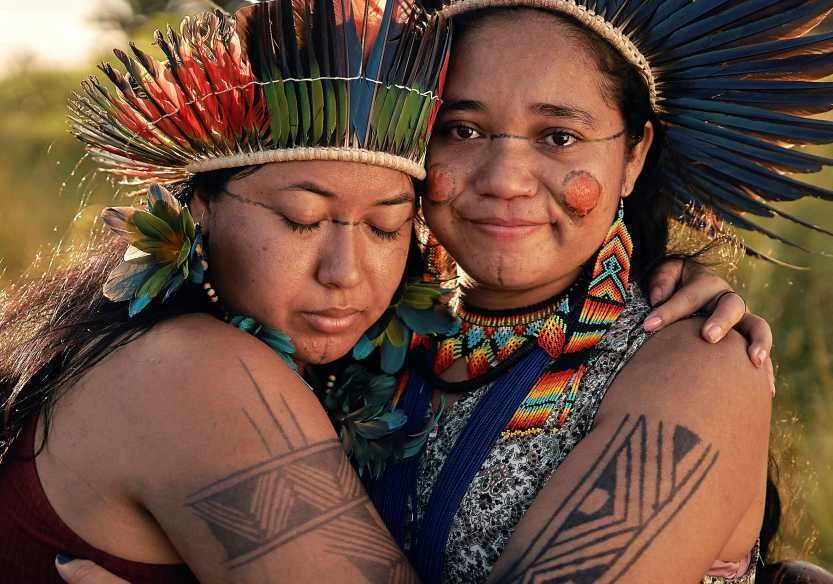
Planting Water – Hope Takes Root in the Earth
In 2019, Austrian filmmaker Peppo Wagner accompanied the International Pernambuco Conservation Initiative (IPCI) on a journey to Brazil. The aim of the trip was to reveal the profound connection between the precious pernambuco wood, music, and the people who work this rare wood with care and dedication. The result was the powerful documentary Perfected Sound – The Wood of the Bow Makers, which movingly traces the journey of the wood from its origins in the Brazilian rainforest to the workbenches of bow makers. The connection between forest and music, between nature and craftsmanship—this bond became tangible in the film.
Over the years, a friendship has grown from this initial collaboration. So it was that I heard early on about his new film project: Parenzana – A Journey Through Three Countries, which premiered in November 2023 on 3sat, the public broadcaster shared by Germany, Austria, and Switzerland. The journey follows the path of a former railway line through Slovenia, Croatia, and Italy—and as in Perfected Sound, Peppo Wagner once again succeeds in poetically weaving together landscapes, people, and stories.
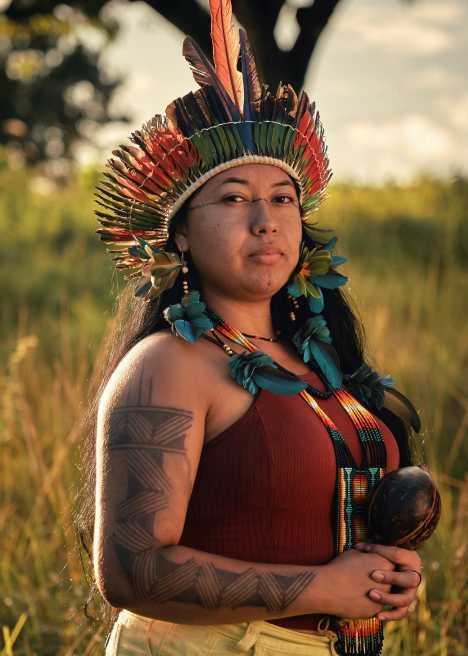
Immediately following this broadcast, 3sat aired another documentary: Aid for the Atlantic Rainforest – Two Women and Their Commitment. The opening images were powerful and serene at the same time: a young Indigenous woman and a Swiss ornithologist walking together through the Brazilian rainforest. Then, a moment of symbolic depth: the young woman, Hamangai Pataxó Hã-Hã-Hãe, has a leaf from the Pau-Brasil tree—whose wood is of central importance to our bows—tattooed on her forearm. A symbol of identity, belonging, and resistance. The commentary tells us that Hamangai is one of the first members of her people to attend university. She moves with remarkable ease between the traditions of her people and the modern world, where she acts as a mediator, activist, and bearer of hope.
I was deeply moved by her strength, her clear vision, and her natural authority. And by the closeness to the town of Pau Brasil, which is connected to our work not only geographically but also emotionally. A few days later, I reached out to the filmmaker, Marina Wutholen. I shared my impressions and thoughts—and asked her for a way to contact Hamangai. Less than an hour later, Hamangai got in touch with me. Direct, open, warmhearted. A conversation began that quickly developed into a deep connection—and ultimately led to a joint project: Planting Water.
But what does it mean to plant water?
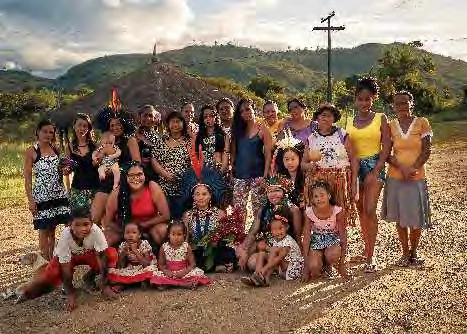
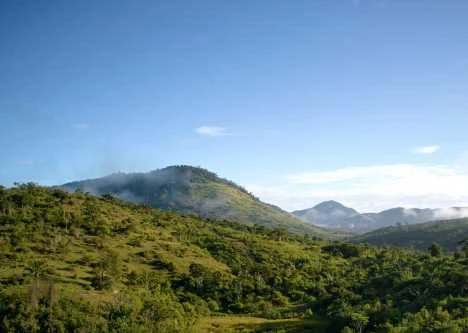
Following the Simpósio Nacional de Ecologia, Conservação e Produção Sustentável do Pau Brasil in Ilhéus—a major gathering of scientists, conservationists, and advocates of sustainable forestry—we travelled with Hamangai to her people's territory, about 135 kilometres away: the Pataxó Hã-Hã-Hãe Reserve. This region still bears the scars of its past. For decades, the land was in the hands of large landowners who dispossessed and exploited the Indigenous families. The struggle for restitution was long, painful, and costly—only in the 1990s was the land finally returned to its rightful inhabitants through a court ruling. But the retreat of the former landowners brought not reconciliation but vengeance: out of spite, they destroyed the remaining forests, burned fields, and poisoned soil and water sources. What was once green and blooming became a desolate steppe. The water table dropped dramatically, and the river that once flowed like a lifeline through the land is now only a narrow, exhausted stream.
And yet, even in this devastation, new life is beginning to grow.
With support from IPCI, the local community, and the Floresta Viva Institute, a tree nursery will be established. A place of hope—tangible, concrete, sustainable. Here, a variety of native tree species will be cultivated, including Paubrasilia echinata, the Pau-Brasil tree. The seedlings will be planted in the barren, damaged areas of the reserve—not only to restore the ecological balance but to bring healing to the land. It is an answer to violence—with life. An answer to destruction—with roots. An answer to exploitation—with a future.
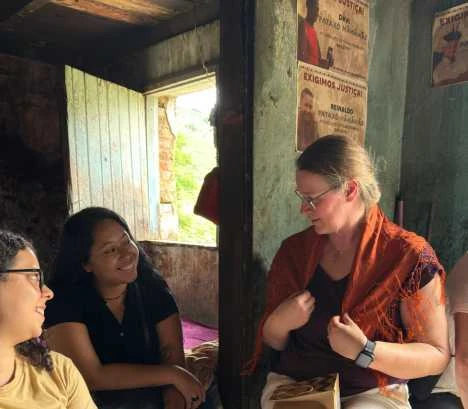
It is also a process of inner healing for the people who live there. In Hamangai's parents' home hang photographs of four young men—members of her family—who lost their lives in the struggle for land. In the faces of the family lies the memory of death, displacement, and injustice. These are not stories of a distant past—they happened only a few years ago and continue to shape daily life.
Planting water—it is more than a poetic image. It expresses the desire to restore the cycle of life: trees that provide shade. Roots that hold the soil. Leaves that catch the rain. Water that seeps into the ground and nourishes springs anew. Life that returns—and with it, hope.
We invite you to be part of this project.
With your donation, you help new roots grow from scorched earth. You help bring water back to the dry riverbeds. You empower young people like Hamangai to share their knowledge and dreams with their community—and with the world. You help ensure that the sound of the forest, the sound of music, the sound of life will not be silenced.
Music. Forest. Humanity. They are inseparably connected.
Help us protect this connection.
Source: IPCI Journal, first edition, 2025. Copy-edited web version; the content reflects the original publication date.
Original PDF · English